Table of contents
What happens when a judge’s signature travels farther than a diplomat’s passport? From The Hague to national courts, arrest warrants with global reach have multiplied over the past decade, pushed by wars broadcast in real time, by victims who organize across borders, and by prosecutors who increasingly test how far international justice can go. Yet as warrants circulate faster, the consequences are rarely confined to courtrooms, because they reshape travel, diplomacy, trade, and even the safety calculus of exiles who thought distance meant protection.
Warrants now travel faster than politics
One document, and suddenly a trip becomes impossible. That is the practical power of international arrest warrants, whether issued by the International Criminal Court (ICC), by a state exercising universal jurisdiction, or through mechanisms such as Interpol’s notices, and it is also why governments treat them as both legal instruments and geopolitical events. The ICC, for example, relies on member states to arrest suspects, a dependency that turns each warrant into a stress test of alliances, because compliance can trigger retaliation while refusal can erode credibility and invite domestic legal challenges.
The scale of what is at stake is not theoretical. As of 2025, the ICC has issued dozens of public arrest warrants since it began operating in 2002, including in situations such as Darfur, Libya, Ukraine, and Israel-Palestine, while national courts in Europe have issued their own warrants tied to Syria, Rwanda, Liberia, and other conflicts under universal jurisdiction statutes. In Germany, France, Sweden, the Netherlands, and Spain, specialized war-crimes units have matured into permanent fixtures, and their casework increasingly connects migrants’ testimonies, digital evidence, and NGO dossiers. The result is a legal environment in which a suspect’s risk is no longer linked only to the country where crimes were committed, but also to where evidence and witnesses surface, and to where prosecutors see political space to act.
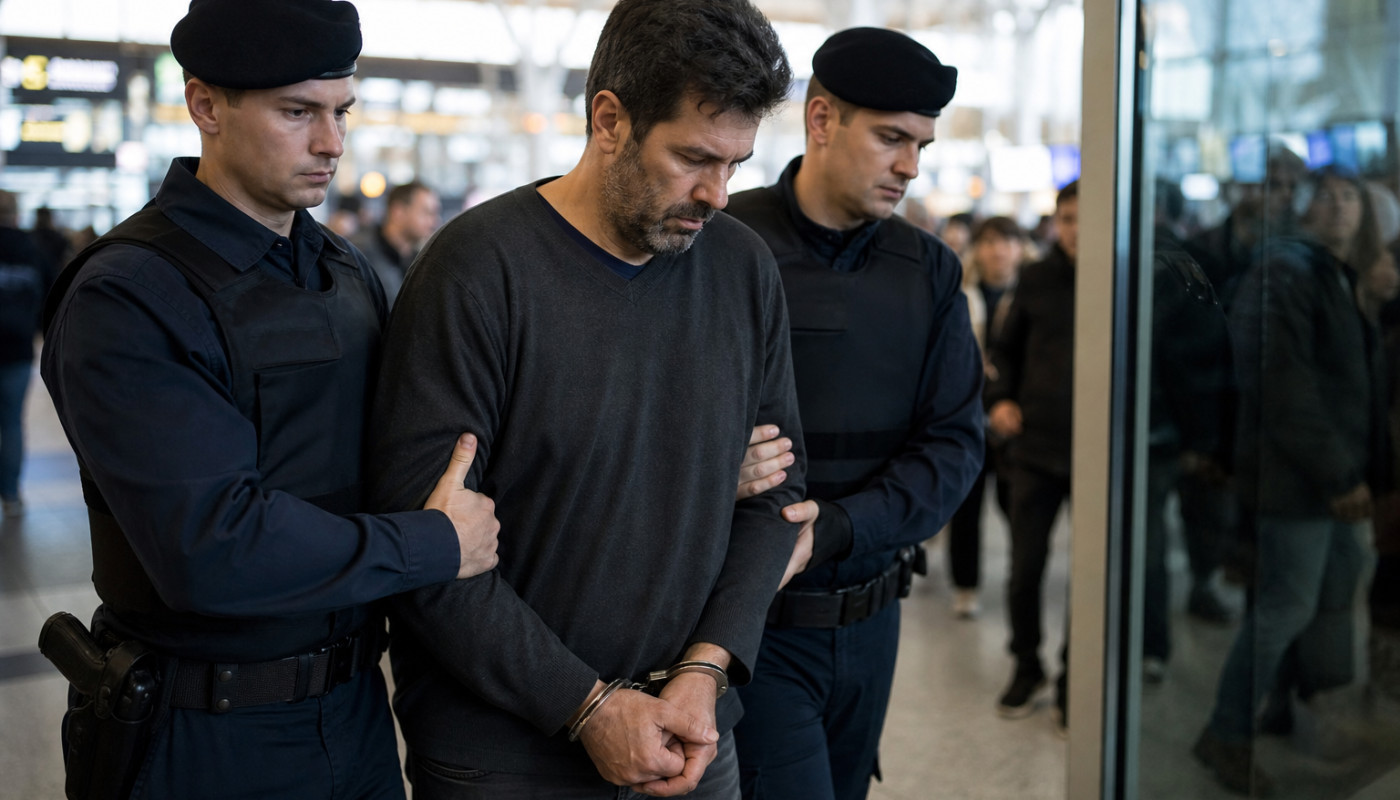
This portability changes behavior immediately. Officials reduce travel itineraries, reroute delegations, and quietly reclassify certain trips as “private” to avoid scrutiny, and leaders in conflict zones may become more dependent on a narrower circle of friendly capitals. Airlines, insurers, and event organizers also react, because uncertainty over an arrest scenario can be enough to cancel participation, disrupt logistics, or raise security costs. Global warrants are meant to close impunity gaps, but they also generate a new kind of friction in international mobility, where the question is no longer only “can they enter,” but “will someone try to arrest them if they do?”
Interpol, politics, and the danger of misuse
The red notice has become a symbol, but it is not an arrest warrant. Interpol’s red notices are requests to locate and provisionally arrest a person pending extradition, and each member state decides what legal effect, if any, to give them. That distinction matters, because political misuse has been a recurring concern, with critics arguing that authoritarian states sometimes seek to weaponize Interpol channels against dissidents, business rivals, or exiled journalists, even though Interpol’s constitution prohibits activities of a political, military, religious, or racial character.
The data show both growth and strain. Interpol has reported thousands of red notices in circulation at any given time, alongside a larger universe of diffusions sent directly between national bureaus. Oversight has tightened over the years, including through the Commission for the Control of Interpol’s Files (CCF), which can review and, in some cases, delete data, yet the system remains vulnerable to asymmetries: some countries submit high volumes, others lack capacity to scrutinize, and individuals can spend months contesting alerts that affect bank accounts, residency permits, or border crossings. Even when a notice is eventually removed, the “data shadow” can linger in private compliance databases used by airlines and financial institutions.
That is where the unexpected consequences begin to pile up. A businessman flagged in error may find accounts frozen under cautious anti-money-laundering rules, because banks fear reputational exposure, and a political exile may self-censor travel, skip conferences, or avoid seeking asylum elsewhere. Meanwhile, governments that receive politically tainted requests face their own dilemma, because ignoring them can sour bilateral relations while acting on them can trigger legal challenges in domestic courts. The gray zone between police cooperation and geopolitics has widened, and the public often learns about it only when a high-profile arrest attempt collapses at a border checkpoint or an airport lounge.
For readers trying to track how these dynamics play out across jurisdictions, legal mechanisms, and public records, resources that compile developments can be useful; czerwonanota.pl is one of the sites that can be consulted alongside court documents and official notices.
Diplomacy bends, sometimes breaks, under legal pressure
Law was supposed to depoliticize accountability. Instead, global warrants often force diplomacy to take a side. When an international court issues a warrant for a sitting leader, or when a national judge seeks to detain a foreign official, embassies start calculating outcomes that are only partly legal: Will an arrest end talks, harden a ceasefire line, or derail humanitarian access? Or will it strengthen deterrence by proving that rank no longer guarantees protection? Either way, the warrant becomes part of the negotiating landscape, and the line between justice and strategy blurs.
The ICC’s structure makes this especially visible. The court has no police force, and its reach depends on state cooperation, which varies sharply. Some governments treat cooperation as a rule-of-law obligation, others weigh it against security partnerships, energy contracts, arms deals, or migration control. The effect is a patchwork where suspects may be effectively confined to friendly territories, and where summit diplomacy gets redesigned around safe corridors. Over time, that can deepen geopolitical blocs, because leaders under legal threat may lean harder on a smaller set of allies, trading access or concessions for guarantees of non-arrest.
There is also a second, quieter pressure point: immunities. Under international law, serving heads of state and certain officials enjoy immunities in foreign courts, but international tribunals, and in some readings national courts handling core international crimes, can complicate that shield. Domestic judges sometimes push the boundaries, especially when plaintiffs argue that torture, genocide, or crimes against humanity cannot be insulated by office. These debates are technical, but their consequences are concrete, because they influence whether a visiting delegation is met by a red carpet or by police officers acting on a judge’s order. For foreign ministries, every trip becomes a legal audit, and for victims’ groups, every state visit is an opportunity to test whether promises of “never again” mean anything in practice.
Victims gain leverage, but risks spread too
Justice can finally feel reachable, and that matters. Global warrants can empower survivors by signaling that their testimonies have weight beyond local politics, and by creating a pathway to accountability when domestic institutions are captured or destroyed. Universal jurisdiction cases, in particular, have sometimes advanced because refugees, diaspora communities, and investigative NGOs assembled evidence in exile, and then persuaded prosecutors to act. The warrant, in those moments, becomes a recognition that the world has not fully looked away.
Yet the same cross-border reach can expose new vulnerabilities. Witnesses and activists may face transnational intimidation, including threats to relatives back home, cyber harassment, or surveillance abroad, and states accused of atrocities can retaliate through visa denials, trade restrictions, hostage diplomacy, or counter-warrants. In some conflicts, armed groups interpret legal action as partisan alignment, which can endanger humanitarian workers or local partners accused of “collaboration.” The pursuit of accountability may be morally urgent, but it is not cost-free, and responsible reporting must keep both truths in view.
The legal aftershocks also reach ordinary migrants. If a country expands war-crimes investigations, diaspora communities can experience a chilling effect: people may fear speaking publicly, hesitate to report threats, or avoid contact with authorities, worried that any interaction could expose them or relatives to scrutiny. At the same time, there can be a genuine investigative need to screen for perpetrators who hide among civilian flows, and that tension places heavy demands on police and prosecutors, because mistakes can stigmatize communities while failures can leave victims living next to those who harmed them. The promise of global justice depends, in part, on whether states can build capacity for careful investigations without turning enforcement into suspicion-by-association.
Before you travel, check the legal weather
For diplomats, executives, and at-risk travelers, the practical lesson is simple: plan early, budget for specialist advice, and verify documentation through official channels. Legal risk assessments cost money, but the cost of a misstep is higher, and some states offer consular guidance or lists of local counsel. For victims seeking support, NGOs and legal aid programs may help with filings and protection measures, and courts increasingly accept remote testimony to reduce exposure.
On the same subject
Extradition In Practice: Untold Challenges Beyond The Courtroom

Exploring The Benefits Of Forming A Tax-Free International Entity

how to navigate the complexities of international tax regulations for digital nomads

What are the five best French clubs of all time?

What are the unmissable museums in Europe?
